WEBSITE
A website is a collection of interconnected web pages that are accessible through the internet under a single domain name. It serves as a digital presence for individuals, businesses, organizations, or brands to share information, offer services, sell products, or communicate with their audience globally. In today’s digital landscape, a website acts as the online identity of a brand and functions as a central hub for all online marketing activities. Unlike social media platforms that operate under third-party control, a website provides full ownership, customization, and control over content, design, and user experience.
WEBSITE DESIGNING
Website designing refers to the process of planning, conceptualizing, and creating the visual layout, structure, and user experience of a website. It focuses on aesthetics, usability, functionality, and responsiveness to ensure that users have a smooth and engaging browsing experience. Website design is not just about appearance; it also includes user interface (UI) design, user experience (UX), color schemes, typography, navigation structure, and content placement.
A professionally designed website improves user satisfaction, reduces bounce rates, and increases engagement and conversions. It ensures that the website is visually appealing, easy to navigate, and aligned with the brand identity. Modern website designing also emphasizes mobile responsiveness, fast loading speed, and accessibility for all users.
DOMAIN AND HOSTING
Domain and hosting are fundamental components required to make a website accessible on the internet. A domain is the unique address of a website that users type into their browser to visit the site, while hosting is the service that stores website files and makes them available online.
DOMAIN
A domain is the unique web address that users type into their browser to access a website on the internet. It acts as the digital identity and name of a website, making it easy for users to find and remember instead of using complex numerical IP addresses. A domain represents a brand’s online presence and plays an important role in credibility, branding, and online visibility.
HOSTING
Hosting, also known as web hosting, is a service that stores all the files, data, images, databases, and content of a website on a server and makes them accessible on the internet. When someone visits a website, the hosting server delivers the website content to the user’s browser. Without hosting, a website cannot be displayed online because there would be no server to store and serve the website files.
TYPES OF WEBSITE
➤ Business Website
A business website represents a company online by showcasing services, products, and brand information.
➤ E-commerce Website
An e-commerce website allows businesses to sell products or services online with secure payment integration.
➤ Portfolio Website
A portfolio website showcases skills, projects, and professional achievements.
➤ Blog Website
A blog website focuses on publishing articles, guides, and informational content regularly.
➤ Landing Page Website
A landing page is a single-page website designed for marketing campaigns and conversions.
Software for Website Design and Development (CMS)
Content Management Systems (CMS) are software platforms that allow users to create, design, manage, and update websites without advanced coding knowledge. A CMS simplifies website development by providing templates, plugins, and user-friendly dashboards for content management.
Popular CMS platforms include:
WordPress
Wix
Shopify
Joomla
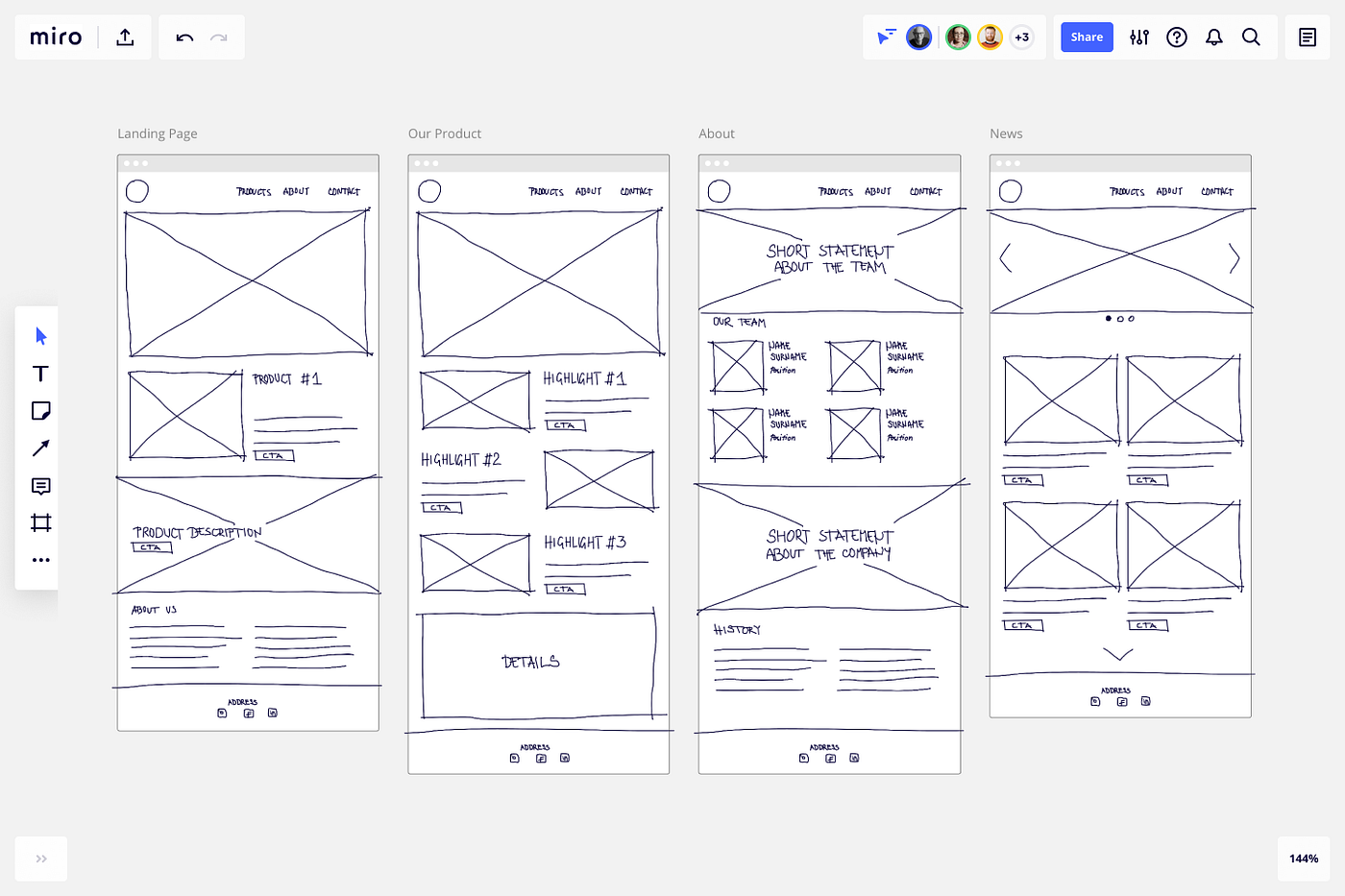
WIREFRAME